Friday, August 27, 2010

Review: The Legend of Zelda: The Wind Waker


It has recently come to my attention that many of you, despite owning a Gamecube or Wii, and being fans of the Zelda series, have still not played The Legend of Zelda: The Wind Waker. If I may ask, what the hell have you been doing with your life?! This discrepancy in the gaming community is shocking, and I will not stand for it. So, let's fix that. I am going to show you today that this is not the black sheep of the main Zelda franchise, and why you need to play this game. Aside from Majora's Mask, The Wind Waker is likely the most controversial title in the series, which is likely the reason people stray away from it. But, I'm not only going to tell you that this is a legitamite title in the series, but how it may be one of it's best.

Gameplay

The Wind Waker plays similarly to its Nintendo 64 predecessors, The Ocarina of Time and Majora's Mask, which is a very good thing. You can still assign weapons to 3 different controller buttons [X, Z, and Y, in this case], and the controls remain similar, except for a few improvements. There is now a much easier-to-control difference between tiptoeing, walking, and running, because of the Gamecube's more accurate analog stick. There have been some rather nice changes to combat, as well. Link can now perform actions such as parry attacks, which let him dodge an enemy's attack, and strike back. For some enemies, this is a necessary tactic to defeat them, but for the most part, hacking and slashing will do just fine. So, yes, the combat remains mostly unchanged from the standard Zelda formula. But that's not what I want to talk about. The thing that really sets Wind Waker apart from the crowd; sailing. As you probably know, the game allows you to sail around a huge world map to 49 different islands. I always thought that this was the game's strongest point. Zelda games have always tried to give the player a vast world to explore, and this is the epitome of that idea. You could spend hours traversing the Great Sea, searching in every nook and cranny. I spent a good few days just completing the map! While some may find it boring, I think it gives you a real sense of adventure that is uncommon to find in most games. I should probably move on before I start to ramble about this, though. You will find equipment similar to what you have used in previous games, so it should feel familiar. One of the bigger additions to the game is the Wind Waker itself; a baton that you use to control the direction of the wind to sail more effectively, or solve puzzles. The method of doing so is similar to Ocarina of Time, where you must memorize musical patterns, and play them back. Nothing new there, but it is still just as good.

Gameplay: 9.5/10


Story

Little has changed about the central plot of Wind Waker in comparison to the other games in the Legend of Zelda series. You still play as a young, nameless boy [although most people just prefer to call him Link] who wears a green tunic, and must kill the evil Ganondorf/Ganon and save Princess Zelda. Now that that's out of the way, let's look at what is unique to The Wind Waker. Link is a boy living on Outset Island with his sister and grandmother. But one day, a giant bird flies over the island, carrying the captain of a pirate ship. Link goes off to rescue her, which eventually leads to the bird capturing Link's sister. The pirate crew allows Link aboard so he can rescue his sister in the bird's lair. That's about as much as I can say without giving any spoilers, but as you progress, it eventually leads to Link having to save the entire world from Ganon's plans. Standard fare for the series; it's what we have come to expect from a quality Zelda title. It doesn't have the deep, emotional narratives of an RPG, but it is what it is, and it is still a great one.

Story: 8/10


Sound

I'll cut right to the chase; The Legend of Zelda: The Wind Waker has arguably the best soundtrack of any Zelda game. That's a controversial statement, I know, but I can back it up. Since the Gamecube was Nintendo's first disc-based console, they were free to use that extra space to make disc-quality audio. This makes for a truly sublime soundtrack that captures the moment of every single situation in the game. Sometimes, I just leave the game sit at the title screen so I can hear the main theme! Now, don't get me wrong; there have been some breathtaking soundtracks in the Zelda series, but it is my opinion that The Wind Waker takes the cake. There are just so many songs that give an adventurous, bold, yet fun feeling, which is the embodiment of the Zelda series as a whole. Never have the songs in a Zelda game felt more powerful and suitable. You have to hear it to believe it, and when you do, my arguement will start to make sense. The music in The Legend of Zelda: The Wind Waker is on an entirely different level than most games. It's just not something you find everyday, and you appreciate it when you do.

Sound: 10/10


Graphics

One of the most controversial aspects of The Wind Waker was its drastically different art style. The Zelda games on the Nintendo 64 seemed to strive as much as they could for realism, but The Wind Waker adapts a more cartoon-like style. This decision has divided the Zelda fan base since the game's unveiling. I'm here to tell you that the only people who don't like The Wind Waker's graphics are people who haven't played the game. It is obvious that Nintendo put a lot of time and effort into creating some of the most artistically pleasing graphics on the system. The Wind Waker's visuals are clean, well-defined, and polished to no end. The draw distance while sailing is phenomenal; the Great Sea really seems to on forever, and you can see islands from several miles away, not counting what you can see with the telescope. It's incredible to actually be able to see your destination well before you're near it. In this way, the art style was a good decision not just in appearance, but was actually some elegant programming and system resource management. There aren't many complicated textures in many of the graphics, especially in the ocean, so the draw distance and framerate would benefit greatly. Well done, Nintendo. Oh, and the game runs in 480p if you're lucky enough to have a component cable, and it's a fairly big improvement, especially in 2D sections like the menus, where it is a night and day difference. If you got a component cable just for this game, it would already be worth it. So, The Wind Waker's graphics are both an artistic and technical triumph.

Graphics: 10/10


Extras/Value

There are plenty of side quests in The Wind Waker, so you'll always have something to work towards. After completing the game once, you unlock the second playthrough mode, which gives you special bonuses such as Link wearing his pajamas throughout the whole game, letting you use the Color Pictobox [Camera] from the start, and translating all Hylian text into English. There is also a figurine-collecting quest that requires you to obtain photographs of different things in the game to have them made into figurines. In case you were wondering, yes, it is very difficult to collect all of them. Also, there is the Zelda tradition of the item trading game. The Wind Waker is currently being sold for $20 at Gamestop, but it doesn't matter what the price is. Buy it. You will not regret it; I assure you.

Extras: 9/10

TheLeagenOfZeldaWindWaker-4.png The Leagen Of Zelda Wind Waker image by plasmasoul1


Overall

The Legend of Zelda: The Wind Waker is one of the definitive titles for the Nintendo Gamecube, and it certainly deserves that accolade. The game is a masterpiece, with polish and craftsmanship apparent in every single one of its aspects. I have completed it three times already, and I loved every minute of it. The game is completely undeserving of all the hate it has received. If you have yet to play The Wind Waker, now is the time. Stop ignoring the game because of its art style, or whatever preconceptions you may have, get yourself down to a game store, buy the game, and play it. It's about time you did.


Overall: 9.5/10

This is Lisalover1, trying to pretend the CD-i Zelda games don't exist.

Thursday, August 12, 2010

The Best Cancelled Gamecube Games

The launch of a new console is always an exciting event; a whole new era of promise and opportunity awaits for each new competitor in the console wars, with countless titles and accessory hardware announced. It's often easy for some things to get caught up and lost in this chaos. Unfortunately, sometimes this does happen. Certain titles that catch the eye of gamers never see the light of day, and fade into obscurity. For some, it is best that they stay lost, because they never showed much potential in the first place, but for some games, it is a real shame they are never released. These are the games that would have likely been very good additions to the system's library, and that should really be remembered. These are the best cancelled Gamecube games.


Thunder Rally


What Was It?:
Thunder Rally is a car combat game created by Iguana Entertainment [Later bought by Nintendo and renamed Retro Studios], and was one of the earliest planned titles for the Gamecube, all the way back in 1998, when the system was barely a prototype, and was codenamed "Dolphin". On a side note, this game was the initial reason Retro Studios was formed. The gameplay in Thunder Rally consists of a mash-up between Twisted Metal and Battlebots, in which the player can build a car, and drive it through a city, destroying other cars. Sounds simple right? Well, that's correct, but it's not the main draw of the game. TR was designed to include 4-player split screen mode, and have 4-player online play as well, making it possibly the first Gamecube game planned to have online multiplayer! The game also features very sharp graphics, from what is shown in early screenshots.

Why Was It Cancelled?:
Shortly after Retro Studios was established, and began working on games for the Gamecube, Nintendo ordered a massive reorganization of the company, which changed most of the company's staff, resources, and projects. Unfortunately, Thunder Rally, along with about 3 other titles, and Metroid Prime being the only one of these that was ever released. I would have loved to have played this game; as I have said in previous articles, the Gamecube was hurting for online games throughout its entire lifespan, and anything would have helped.


Kirby Adventure


What Was It?:
Kirby fans had to wait until 2005 for Nintendo to finally announce a Kirby platformer for the Gamecube. At E3 of that year, a trailer for "Kirby Adventure" was shown, and it seemed to be everything people expected from the series, but the exception being it taking advantage of the Gamecube's 4 controller ports. Kirby Adventure was supposed to allow 4-player simultaneous Co-Op, building upon the 2-player Co-Op introduced in the SNES Kirby games. The other 3 players controlled enemies Kirby has swallowed and discarded, making them allies. The game was meant to take the best aspects of the SNES and N64 Kirby titles, and update it for the more powerful Gamecube hardware. The graphics would be in full 3D, but gameplay would take place on a 2D plane, like in Kirby 64, and said gameplay seems to leave the formula mostly unchanged, with all the series' common conventions remaining.

Why Was It Cancelled?:
Kirby Adventure was an exciting title for Gamecube owners, and they were anxious to get their hands on it. Then... nothing. Other than delay announcements, Nintendo barely said anything after the game's initial showing at E3 '05, and fans were left in the dark. In the end, with the exception of the Game Boy Color, the Gamecube became the first [and only] major Nintendo console without a Kirby Platformer. No one is really sure why Nintendo cancelled Kirby Adventure, but most speculate that it was because they were focusing their efforts on the upcoming Revolution/Wii, and new games for it. In short, the game came too late in the GC's life to have a chance at being released. Oh, well. At least Kirby: Epic Yarn is coming to the Wii soon, so fans have that to look forward to.


Raven Blade


Raven Blade Picture

What Was It?:
After the N64 era, Nintendo was really starting to feel the hurt caused by the lack of RPGs on their consoles after the departure of Squaresoft to side with Sony's Playstation. Thus, they aimed to remedy this with the Gamecube, although they ultimately failed at achieving this goal. The best example of this was a game called Raven Blade. It was meant to be a Western Action RPG exclusive to the Gamecube, meant to be the first in a series of GC-exclusive games to fill out the console's RPG library. The game looked quite good, even in its beta phase, with impressive graphics and animation. The gameplay was meant to play like the acrobatics of Prince of Persia, combined with the framework of an Action RPG, to make something that made Gamecube owners proud. Too bad it got cancelled.

Why Was It Cancelled?:
Remember how I mentioned how Retro Studios had a huge restructuring and reorganization, and several games were cancelled? This was one of them. So, the same story applies as with Thunder Rally. It's Nintendo's loss, and Gamecube gamers' losses, too. The only good thing that came out this is that Metroid Prime probably became a much better game through Retro Studios focusing on it.


Kameo: Elements of Power


What Was It?:
Kameo was a title announced around the Gamecube's launch, and was predicted to be an early hit title for the 'Cube. Rare actually had many ambitious projects planned for the Gamecube, until they were bought out by Microsoft, and almost of them were scrapped. If you want my opinion, Rare becoming a Microsoft subsidiary company really killed their creativity and their spirit. But enough of that. Kameo was an action game in which you control a girl who can turn into different monsters to solve different puzzles, and defeat enemies. The monster changing system was actually quite interesting, as you could also summon some of these monsters to fight with you in battle. The game continues with Rare's distinctive cartoony art style, and it seemed to fit quite well with the game.

Why Was It Cancelled?:
As I said before, Kameo for the GC was cancelled because Microsoft acquired Rare in 2002, ending or heavily delaying most of their next-generation projects. The only game that Rare was allowed to finish for the Gamecube was Star Fox Adventures, which marked the very last Rareware game made for a Nintendo home console. They were permitted to continue making games for Nintendo's portable systems, but even that may change soon, with Microsoft launching Windows Phone 7. It's hard to believe that a once great developer like Rareware can go from making classics like Banjo-Kazooie and Donkey Kong Country to making crap like Kinect Sports. *Sigh*... Anyway, Kameo was eventually released as an Xbox 360 launch title.


Dead Phoenix

File:DeadPhoenixScreenShotIGN01.jpg

What Was It?:
Dead Phoenix was an unreleased game by Capcom planned as a Gamecube exclusive, along with 4 other exclusive games, collectively known as the Capcom Five. Four of these 5 were eventually released, although 3 of them were eventually ported to the PS2. Dead Phoenix was supposed to be a hack-and-slash action game in which the character can fly around. Think "Dynasty Warriors" with wings. There were also Panzer Dragoon-esque shooting segments to the game, as well, as you can see above. While very little, if any, information was released about the game, it seems to have been shaping up to be a very fun and impressive game, with Gamecube graphics that we can only expect from Capcom.

Why Was It Cancelled?:
I honestly have no idea why Dead Phoenix was cancelled. Capcom never released any reasons for its cancellation, so there's nothing to speculate on. It's not like Capcom lacked the resources to make the game, so that's not a possibility. We'll never really know why Dead Phoenix was cancelled, at least until Capcom says something, which isn't likely to happen. Sorry, but I just don't have anything more to say.

Unity


What Was It?:
I saved the best for last. Which, in this context, makes it the most tragic that it was never released. Unity was a psychadelic and wild game, combining aspects from Rez, Defender, and Tempest. Suitably enough, it was created in part by Jeff Minter, who created the latter. However, it was also created by Peter Molyneux, which pretty much doomed the game to a lack of a release since day one. The game had two different gameplay segments; the first of which resembled the classic shooter, Defender, in which the player can move his ship forward and backward across the screen, shooting down enemy ships. That part is pretty basic, and we've all seen it before, but the second part puts the player's ship on a circular tunnel, and they must move around it and shoot enemies as they approach. Switching between these two styles was to keep players constantly on their toes. The presentation is phenomenal, with hundreds of glowing lights and sounds surrounding you at all times, which is highly reminiscent of Sega's classic shooter, Rez. I was seriously having trouble believing this was actually a Gamecube game.

Why Was It Cancelled?:
Two words: Peter Molyneux.


Well, that's it for now. Looking back at all of these games, it is easy to see that the Gamecube was a well of untapped potential. At least we can see that some developers tried at pushing the limits of the little purple lunchbox. Let these games forever live on in our memory as what could have and what should have been. And who knows? Maybe someday a few beta versions of these games may pop up on the internet, and we may be able to experience at least a little bit of them. It's entirely possible, and in these cases shown above, I certainly hope so.


This is Lisalover1, desperately seeking a Radio Allergy beta disc.

Tuesday, August 10, 2010

Review: Cubivore: Survival of the Fittest


It seems that there are games for every system that everyone knows about and are simply essential games for owning that system. they are regarded by most as the best games for the system. Then there are games that no one has heard about, but can still be very enjoyable. Cubivore is the epitome of a hidden gem. It is made by Atlus, a company well-known for taking risks, much to the joy of their fans. Cubivore is a game you don't see everyday; it came way out of left field, and is a welcome surprise to Gamecube owners. So, what exactly is Cubivore, and why should you care?


Gameplay

In Cubivore, you control a small pig-like cube-shaped animal, which must eat food other animals to survive. It is a very weird gameplay style, but it works well. You have a health meter that is replenished by eating other animals, which adds a sense of tension to stay alive while playing. When you eat other animals, your animal mutates, usually resulting in the repositioning of the square "limbs" on its body. In later levels, it gives your animal certain statistical bonuses as well. You can eat different combinations of animals to fine-tune what characteristics and abilities you would like to have, which gives the game a good amount of depth when you want to get the most out of the game's gameplay system. At the start of some levels, if you defeated and ate the right material from the previous level's boss, your animal has the option to mate, and create offspring that is stronger, faster, and has an extra limb. The child's statistics are based off your decisions and eating habits of the previous level, and also affects what kind of offspring he can have as well. It is a very deep and fun-to-use system if you get the hang of it. You have to actually plan out your method of progression for some levels in order to survive. You can get through the first few levels pretty easily, but some of the later ones can give you a bit of a challenge to figure out the best plan of attack. All I can say is that Cubivore has one of the more unique and interesting set of gameplay concepts that I have seen. It is a real treat for those who want something out of the ordinary.

Gameplay: 8.5/10


Story

"I want to be alive. That was the first thought I ever had." This is the opening line in Cubivore, said by the main character, right after he is born. He is a small creature called a Piggy, that, in his initial state, looks more like a tadpole. You can become other species eventually through the course of the game via breeding, but this is always what you start out as. The story of the game is about a horde of animals called the "Colorless", which devour the wilderness of the land, and take away its color. They are lead by a large, fearsome colorless beast, called the Killer Cubivore, which is the strongest animal in the land, and the ultimate villain of the game. Similar to what I said in the Billy Hatcher review, there's not much to Cubivore's story, because the gameplay takes center stage. The sole driving force behind the main character's actions are survival instinct, which gives the player a mindset as such; ignoring all other impulses, and doing everything to stay alive. It's very interesting to see a game do this, as I haven't seen it done very well before. There is barely any story beyond the first cutscenes, so the player is mostly left to himself, which gives the player time to think about his surroundings, and fill in the blanks of what little story there is by themselves. It is a good use of isolation in a game, which leads me to think that Atlus put a bit more work into this aspect of the game that may be immediately apparent.

Story: 7.5/10


Sound

The soundtrack of Cubivore is surprisingly calm and relaxing. Most of the tracks are serene and soothing, which is in stark contrast to the weird vibe the game gives off [or maybe not, depending on how you look at it]. Despite this odd design choice, I liked the music in Cubivore. It isn't anything special, but it gets the job done. The sound effects are not much to write home about either. Overall, there's not much to the audio in this game, and I've run out of things to say about it. Sorry.

Sound: 6.5/10


Graphics

Not many people know this, but Cubivore, along with quite a few other Gamecube games, was originally an N64 game during development. The game was initially designed for the Nintendo 64 Disk Drive, which failed due to a very late release, and few games. Thus, Cubivore was bumped up to be released on the Gamecube. While the game definitely looks better in its finished form than what was shown in early screenshots of the N64 version, it's not by much. The game, while sporting a very unique and interesting art style, doesn't do all it can do to make it stand out. I would have loved to have seen more varied landscapes, with better and more creative use of the 3D-cubist art style. Instead, most of the game takes place on bland, plain wetlands. It's nice for the first couple levels, but gets boring fast. I really think that Atlus could have made the graphics in Cubivore something astonishing and eye-popping, but it almost feels like they quit the idea halfway through. I think a Cubivore sequel that fixes these problems would be a far better game. As it stands, Cubivore's graphics just feel like a good idea that wasn't executed right. Oh, well. At least the game supports 480p; a noticeable change from the N64 version.

Graphics: 6.5/10


Extras/Value

There's really not much else to Cubivore beyond the single-player campaign. There is no multiplayer mode, no minigames, or any other real extras to speak of. This is a real shame; a 4-player cubivore battle would have been cool. You could spend the first half of the match evolving your Cubivore how you like it, then the fighting taakes place in the second half, similar to the City Battles in Kirby Air Ride. I would have loved something like that, and it would make good use of the gameplay. Unfortunately, no such mode exists. Once again, a Cubivore sequel with this feature would rock. The game is currently priced at $13.00 at Gamestop. Not a fantastic deal, but not prohibitively expensive for a used Gamecube game. If you're interested, go buy it. I haven't seen this game around very much at all, so it might end up being one of the rarer games for the Gamecube. If you are a collector, you should keep an eye on this one.

Extras/Value: 5/10


Overall

Don't go into Cubivore expecting an action game that will knock your socks off, and that you will keep coming back to again and again. I admit it is a bit sub-par when compared to other hidden gem games, but it is still a fun and cool experience. I recommend Cubivore to anyone who wants something very different and out of the ordinary, and who is tired with other action games that all look the same. Cubivore isn't so much an Action RPG as it is a really advanced and brutal Tamagochi game. If that sounds interesting to you, then by all means, go and buy Cubivore. If not, you might want to see if you can still find it for rental; you'll still get a kick out of it.


Overall: 7/10


This is Lisalover1, promising to review something better next time.

Tuesday, August 3, 2010

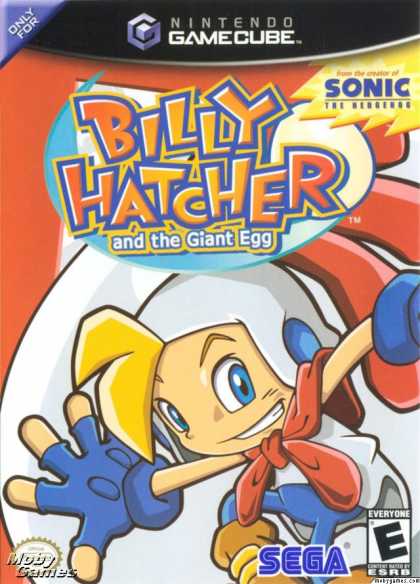
Review: Billy Hatcher and the Giant Egg


Sega's history after the Dreamcast is mostly regarded to be a sad one. Many fans felt abandoned by the company, who once was known for making very creative and fresh games that stood out in quality and had a lot of heart. Unfortunately, games such as these rarely sold well, and eventually forced Sega out of the console market altogether. Sega started to produce more cookie-cutter games to appease the masses, and lost a little bit of its soul in the process. But, every once in a while, even today, the company will release a game that has the brilliant and radically different appeal of what they used to be. In a word, it has the Sega spirit. Billy Hatcher and the Giant Egg is one of those games.


Gameplay

The gameplay in Billy Hatcher, at its core, is similar to games like Super Mario 64, Banjo-Kazooie, or Jak and Daxter, all of which fall under the sub-genre of 3D platformers nicknamed "Collect-A-Thons", due to the fact that the way to advance in these games is to collect certain trinkets for achieving goals in the game, eventually giving you access to new levels. In Billy Hatcher, you must collect Emblems of Courage in each world to advance. While that is the main premise of the game, the genius comes in how you play the levels. In the game, Billy Hatcher is given a Rooster Suit by the chicken god, which gives him the power... [pause for dramatic effect] of eggs. Throughout the adventure, Billy and his 3 friends can roll around eggs they find in the world, and use them as weapons, or roll over fruit, to make them grow, and eventually hatch them to use whatever item or power-up is inside. For example, hatching one type of egg summons a creature that you can use to attack large groups of enemies. Another egg type gives you a new rooster comb for the rooster suit, which augments an egg's attack power. There are over a hundred different eggs you can hatch, which gives the game a lot of variety.

The game uses the same game engine as in Sonic Adventure 2, and it shows. You are timed in each level, and scored based on your time, the number of eggs hatched, number of enemies defeated, and how many combos you preformed [by taking out multiple enemies in a single attack], and gives you a grade, accordingly. This kind of system creates an "I can do better" mentality that made the Sonic games fun long after you beat them. Each level gives you a new objective, and you must obviously complete that objective as quickly and efficiently as possible. I should mention that if you are the type that likes to speedrun through games, this is a good one to consider. There are plenty of tricks and secrets in each level that you can exploit to finish faster, and are a joy when you find them. The only major flaw I can say about the game is it has an uncooperative camera, which, especially when your egg is at full size, makes it hard to see around your and where you're going. Overall, Billy Hatcher will give you your fix for a good 3D platformer, if that is what you're after.

Gameplay: 7.5/10


Story

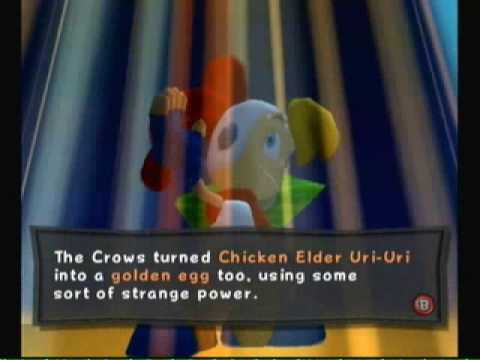
Not much to say here, but what do you expect; it's a platformer. Basically, Billy Hatcher is a normal kid who goes to see his friends one day, when they see a wounded chicken, about to be attacked by a crow. Billy saves the chicken, which turns out to be one of the guardians of Morning Land, the game's setting. The chicken god then gives Billy and his friends rooster suits, and gives them the task of saving Morning Land from the Crow Army. Soon after, Billy's friends are kidnapped, and Billy must free them, with one held in each of the first 3 worlds. By freeing his friends, new missions are unlocked in each world, where you play as them instead of Billy. As I said, it isn't much of a story, but a game like this doesn't need a very elaborate plot. It is what it is, and it's good for that purpose.

Story: 7.5/10


Sound

The soundtrack in Billy Hatcher is lighthearted and upbeat; it suits the game very well. It is very reminiscent of the music in games like Yoshi's Island or the Kirby series. It's just good music that makes you feel good. Even in boss fights, the tunes are distinctively juvenile [in a good way, though], with a clearly exaggerated tone that feels comical, yet dangerous, as if it was ripped right out of an old Batman cartoon. It's hard to explain, but you will understand when you hear it. If I had to describe the game's soundtrack in one word, it would be "Catchy". You'll probably find yourself humming the tunes later, and enjoying it. I must also say that the main theme of the game, while somewhat irritating, still got stuck in my head, and is fun to listen to.

The characters in Billy Hatcher have almost no voiced dialogue, with the only exceptions being for a few words and some exclamations. My only problem is that there are actually a bit too few of said sounds and exclamations, leading to some of them being noticeably recycled at points. But, for the most part, the characters open their mouths about as often as Mario, so don't worry about annoying Sonic-esque voices.

Sound: 8.5/10


Graphics

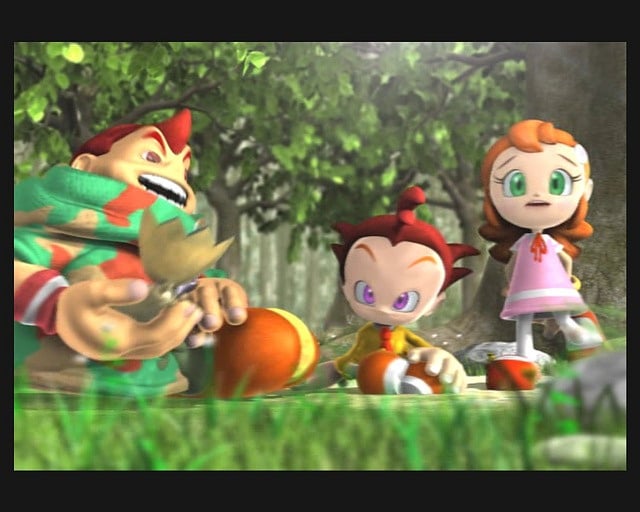
Billy Hatcher is yet another fine-looking Gamecube game, running in 480p progressive scan, and boasting an exceptionally detailed opening FMV. The visuals in the game are colorful and cartoony, with very few sharp edges, making for some very virbant and lively scenery. The character and enemy models are creative and interesting, as are the bosses of each world, which are spectacular to see in motion. The graphics could have been a bit smoother, but that's just me looking for a flaw; there's always room for improvement in any game. While not among the ranks of some of the best graphics on the 'Cube, Billy Hatcher and the Giant Egg has an endearing art style that Sega has spent years trying to perfect through previous games.

Graphics: 8/10


Extras/Value

There are certainly a lot of neat extras in Billy Hatcher, enough to warrant the purchase alone! The first is the multiplayer battle mode, in which up to 4 players fight in an arena with eggs, in a standard last-man-standing fight. There are actually some pretty clever strategies you can come up with in this mode. For example, there is one egg exclusive to the multiplayer mode that lets you plant a fake egg that explodes when another player touches it. I like to place it in an empty egg nest [where new eggs spawn from in the game], so opponents can't tell the difference between the fake egg and the real egg. You can imagine how funny it is to watch. The multiplayer mode could have used a couple more arenas and features, but as it stands, it is solid, and well worth a play with your friends. It really reminded me of Donkey Kong 64's multiplayer battles, now that I think about it.

Another cool feature of the game is that it utilizes the Gamecube-to-Game Boy Advance link cable. If you had a GBA and link cable, you could upload minigames onto your GBA that stay there as long as you leave your GBA turned on. Some of the minigames are actually really good, in that except for length, they look and feel like actual GBA releases! The NiGHTS game alone is almost makes up for the lack of a real portable NiGHTS game. In fact, they're so good, I feel bad referring to them as minigames. Most of the games are scaled-down versions of classic Sega games, such as NiGHTS into Dreams, Puyo Puyo, Chu Chu Rocket, and even Billy Hatcher itself. Remember what I said about the Sega Spirit? This is what I mean. This is the Sega that we all know and love; the Sega that never forgets who they are, and who will always look after its fans. Unfortunately, it is also the Sega that rarely shows its face. But this is exactly what happens when it does. Once again, I cannot emphasize enough how well-made these minigames are! Actually, if I remember correctly, a while back, some hackers found a way to extract these games from the disc, and make them into actual GBA roms! Now that's saying something. Speaking of classic Sega, you can also hatch hidden Sega characters in certain stages, by getting all the hidden coins on that stage. You can use these characters to help you fight. Some of the characters you can unlock are NiGHTS, Amigo, Rappy [A common enemy in Phantasy Star Online], and of course, Sonic, Tails, and Knuckles. There are a few more you can find, but I can't remember them right off-hand. Still, it shows that Sega really gave it their all with this game, down to the very last detail.

I would definitely say that Billy Hatcher and the Giant Egg is worth a purchase. It's currently only $5 at Gamestop, so you can buy it with just spare change. Most gamecube games can be had for very cheap prices right now, so if you're looking to beef up your GC library, you might want to start soon, before Gamestop stops carrying Gamecube games. So, get Billy Hatcher while you can, because you might not have the chance later, for the same price.

Extras/Value: 10/10


Overall

Billy Hatcher and the Giant Egg is, for all purposes, the kind of game that defines who Sega is, was, and will always truly be. The Sega we normally see is not the real Sega; it is just its new parent company, Sammy. They took over, and things haven't been the same since. But, the real Sega is buried deep beneath that huge mass of shovelware and awful sequels. People are always talking about "the last great Sega game", but I have to disagree. There is no end to Sega, they will always be there, but they won't always be the ones in charge. But, Sega will try their hardest to give us the games that its' fans love, as often as they can. This game, along with a few others, are reminders to always let us know that they care. They really still care.


Overall: 8.5/10


This is lisalover1, off to go give my Sega Saturn the playtime it deserves.

Friday, July 23, 2010

The World of Gamecube Homebrew

Homebrew is a magnificent thing, really. Independent developers taking matters into their own hands and breathing life into game consoles. Historically, these developers often start out with the obligatory "Hello World!" program, that only displays the latter message, as proof that a system has been successfully hacked to run unsigned code. Once this gets into the hands of homebrew developers, the floodgates open, and people start making and releasing a variety of programs to be run on the system... at least, that is how it should be.

Although it pains me to say this, the Gamecube's homebrew community is currently very small, and was never all that big to begin with. Most developers flocked to the original Xbox for its hard drive and similarities to the Windows operating system, the PS2 for its wider exposure, and the Dreamcast for its ease of programming. The Gamecube never really got its chance to shine in the world of independent development. That isn't to say that there is no homebrew available for the system; just considerably less. Regardless, let's take a look through the best that Nintendo's box of joy has to offer.


CubeDoom/QuakeGC/Wolfenstein 3D Gamecube

This one is exactly what it sounds like. A group of talented developers went forth and ported 3 of the most famous First-Person Shooters ever released on the PC, to the humble Gamecube. note that one needs the data files from each game to play past the freeware levels included. For anyone who loved these games, but was never very fond of the computer version's control setup, or was always disgusted by the lackluster console ports of previous generations, I would definitely recommend looking into these ports, as the Gamecube's extra power doesn't just run the games, it emulates them. However, some of these ports have problems that the developers haven't yet fixed. For example, sound only sometimes works in the Wolfenstein port, and networking is not yet implemented in CubeDoom. There doesn't seem to be anything wrong with the Quake port, though. I commend the developers for their valiant effort, but there is still work to be done on these ports to make them better. But, if you're looking for some retro FPS action on your Gamecube, then you aren't going to find anything much better than this.


Emulators

Here's where the Gamecube really shines. The system has had some great and powerful emulators made for it, emulating systems all the way up to the Nintendo 64! The 'Cube has all of your standard emulators such as NES, SNES, Genesis, Game Boy, etc., but it also has emulators for the TurboGrafx-16, Sega Master System, PS1, Neo-Geo Pocket Color, Atari 2600, and of course, the Nintendo 64. [There are even rumors about a Dreamcast emulator in the works for the Gamecube and Wii; something I will definitely keep an eye on!] The Gamecube is able to emulate all of these systems with ease, even powering through some of the more graphically-intensive games like Diddy Kong Racing and Perfect Dark with few errors. The PSX emulator is just as impressive, and like most emulators for the Gamecube, is still undergoing active development, due to them being released simultaneously on the GC and Wii. It seems that as long as Wii emulation is alive, so will be Gamecube emulation. As you can expect, almost all the games for consoles before the PS1/N64 work flawlessly in their respective emulators, so I will mainly focus on the latter. I was able to play quite a few games on the N64 emulator with no errors at all. It was smooth, accurate, looked great, and it was much better to play with a Gamecube controller. The PS1 emulator still needs some work, but it definitely gets the job done. There's also something so very right about playing Final Fantasy VII on a Nintendo system, if you know what I mean! The Gamecube is a fine platform for emulators, easily outclassing the PS2's confusing programs. Go and play a few emulators on your 'Cube today, and prepare to be amazed. Here's a video of the latest N64 emulator for the Gamecube. Yes, the title says it is for the Wii, but they are released simultaneously on both platforms, and they play mostly the same.


SuperTux

One of the most famous games on the Linux operating system has received a stunning port to the Gamecube. You play as Tux, the penguin Linux mascot, and try to make your way through the vast land of Antarctica. The gameplay is very similar to Super Mario Bros. In fact, intentionally so. You could even say it was a clone of SMB. But, that doesn't mean it is a bad game; not at all. The levels are plentiful and give you a good challenge, while still not being overwhelming. You could easily sink a few hours into this game if you wanted to. As one of the best homebrew platformers available, SuperTux is something to defend yourself with against the accusation that there are no good homebrew games on the Gamecube. Play it as soon as you can; it is some serious platforming fun.


There are a couple ways to run Gamecube homebrew. The first one to see the light of day was the PSOload method, which uses an exploit in Phantasy Star Online Episodes I & II to run unsigned code. You can find more info about this in the bibliography of this post. However, this method was fixed in the updated version, Phantasy Star Online Episodes I & II Plus. You can also load and play entire Gamecube disc images through this method. the more popular method is the SD card method, where you use an exploit in the Gamecube Action Replay cheat software to make your own code that starts a homebrew loader. You need an SD card, a Gamecube SD card adapter, and a copy of Action Replay for the Gamecube to do this one. The last method is the most straightforward, but requires the most work. If you modify your Gamecube with a modchip, then you can burn homebrew and emulators to a disc. This is good for people who were already going to modify their Gamecube, and don't have any spare SD cards.


Well, that's really the cream of the crop for Gamecube homebrew, as far as I know [I would love to be proved wrong, though!], but it is certainly enough to get new Gamecube owners something to start out with, and most notably, to show the emulation capabilities of the system. I also want to give a shout-out to Gamecube/Game Boy Player fantatic and all-around cool guy, noiseredux of Racketboy Forums, who told me about some cool Gamecube homebrew programs that I missed initially. I have included a link to his blog in the bibliography. Have fun with the games from generations past with emulation!

Bibliography of Links:

Gamecube Homebrew/Emulators: http://gcemu.dcemu.co.uk/
PSOload Tutorial: http://www.eurasia.nu/wiki/index.php/GameCubePsoUploadTutorial
SDload Tutorial: http://www.gc-linux.org/wiki/SDload
Noiseredux's Blog: http://www.rfgeneration.com/blogs/noiseredux


This is lisalover1, and get off my lawn!

Wednesday, July 21, 2010

Review: Metal Gear Solid: The Twin Snakes


Metal Gear is one of the most revered series in the action game genre, mainly due to all but perfecting the concept of stealth action. Despite the MSX and NES [and almost 3DO] Metal Gear games before it, Metal Gear Solid on the PS1 was the one that got everyone's attention, and marked a new milestone in gaming in which just Chuck Norris-ing your way through an action game was not the only option. You no longer had to worry about winning, you had to survive; a major accomplishment in and of itself. Thus, players were forced to think outside of the box [no pun intended] and figure out the best and safest way to go about a mission. But, I'll get to all that once I start the review. Most people remember Metal Gear Solid as just a PS1 game, but few know of the Gamecube remake, which featured countless enhancements to the original. Does the remake expand on the already superb Metal Gear Solid, or is there a reason that it has been neglected?


Gameplay

Continuing from my comments in the first paragraph, the Metal Gear games featured a radically new gameplay style, in which the player must sneak around and avoid combat as much as possible, in stark contrast to other action games. If you tried to complete the game by rushing in and shooting everything that moves, you would be quickly outnumbered, overwhelmed, and dead. After all, Solid Snake is still Human, he can only take so many bullets. That's not to say that it is hopeless. Throughout the game, you get access to some pretty cool weapons to mess around with. But, strangely enough, I found myself using the weakest weapon, the SOCOM pistol w/Silencer for most non-boss fight portions of the game, because it was the quietest weapon in my disposal. That's saying a lot about the effectiveness of a game's intended mindset when you don't want to use the Rocket Launcher(s), Machine Gun, or Sniper Rifle that you have, instead choosing the most sensible option. Speaking of weapons, the Gamecube version includes the First-Person aiming system from Metal Gear Solid 2, making aiming weapons and and looking around a lot easier, not to mention a lot more fun when making precise shots. That is the most notable gameplay mechanic change in the remake, but dozens of other tweaks and fixes were added to make the game more enjoyable. The "Very Easy" difficulty setting was also added. One thing I must note are the controls. Aiming in first-person mode is generally simple and straightforward, but sometimes, it can be very difficult to accurately aim your weapon in time if you need to shoot quickly. You can obviously still use the 3rd person perspective from the original, but shooting in first person is so much easier that it is hard to go back to the old way. Also, pausing in the game is weird; there is no real "pause" button. Instead, you have to either press A+Start to bring up the codec screen, or B+Start to bring up the map. Pressing Start alone It's a minor thing, but someone who doesn't know this when playing may find out the hard way, if you know what I mean. Despite some annoying cheap tricks that the game sometimes uses, and a few illogical segments in which you almost NEED a guide to progress, Metal Gear Solid: The Twin Snakes has incredibly solid gameplay and will provide a good challenge, no matter which difficulty setting you may choose.

Gameplay: 8/10


Story

Gamers have always praised MGS' story, saying it is more like a good action movie than an action game. After playing through it myself, I have to say that you can believe the hype. Written by Konami's mad genius, Hideo Kojima, Metal Gear Solid's storyline is powerful, gripping, and confusing. The game starts out simplistic enough; covert operations soldier Solid Snake is sent in to get information on the new war machine known as Metal Gear Rex. That's where the simplicity ends, though, as things start to fall apart soon after, resulting in a perplexing and compelling mystery that doesn't really make sense until the end. Many people complained about the game leaving you in the dark for so long, but in my opinion, it adds tension and motivation to keep playing.

As I have said, Snake himself is a relatively vulnerable character when considering how quickly he can die in the game, and how the player is actually afraid of even common enemies in the game, because you are heavily outnumbered and outgunned. This is a very interesting storytelling mechanic known as Disempowerment. In other words, in most action games, you are more than capable of dealing with enemies, and in large numbers. The only thing limiting you is your own skill, because the character is naturally stronger than the enemies in the game. That's empowerment, where for the most part, you don't have to worry about the enemies, because you know you are stronger than them. Conversely, disempowerment is when the character is not stronger than the enemies. When the player knows that he can be quickly defeated by enemies which have more powerful weapons and/or more people to help them, tension and even fear are created, giving the player a healthy dose of respect for the situation the game has put them in. They must use everything that both the character and the player has at their disposals to overcome the challenge, despite being in a disadvantageous situation. This establishes somewhat of a bond between the player and the character, and draws them into the story. Metal Gear Solid masterfully utilizes disempowerment, and it shows.

Something that people seem to forget about Metal Gear Solid is that it actually has a good sense of humor at times, even with its serious story. Everyone of course knows about Psycho Mantis' memory card-reading trick [which was updated in The Twin Snakes to recognize saves from some of Nintendo's games], which is probably kind of freaky if you didn't know about it until playing it. Early in the game, I was told that I needed to call a frequency on my codec, but the game didn't tell me what it was. All that was said was that it was "On the back of the package". I remember looking forever for that code in the game, until I realized that I was actually supposed to look on the back of the game's box, where the code is shown in a screenshot! Brilliant! At another point, I had to press the A button as fast as I could to stay alive, so I went to the other room to get my turbo controller, to make it easier. Just as I was about to switch controllers, one of the characters faced the screen, and said, "And don't even think about using a turbo controller, because I'll know!" I was positively shocked, but I laughed my ass off about it the entire rest of the day! One more thing, in the original MGS, in a certain part of the game, you are in an office, and you could find a PS1 connected to a TV in one of the cubicles. In The Twin Snakes, it is replaced by a Gamecube and Wavebird controller, on the Gamecube system menu. There are also now Mario, Luigi, and Yoshi dolls in another cubicle. Little things like that give the game charm and personality. Other than that, the story in the remake went mostly unchanged, save for a few minute differences.

Story: 9.5/10


Sound

The entire soundtrack of Metal Gear Solid was recomposed and re-recorded for the Gamecube version, to take advantage of the extra storage space, and the superior audio capabilities of the 'Cube. Most of the tunes are just higher-fidelity versions of the originals, with slight alterations, but Konami added a few new tracks, as well. For example, the music that plays when escaping from enemy sight, and waiting for the caution meter to go down is now replaced with the opening theme from Metal Gear Solid 2/3 [I always liked that song]. The game also supports Dolby Pro Logic II, so if you have a good audio setup, and if you're really bold, a modified Gamecube with optical audio output, then the game will sound heavenly. The audio for this game alone is practically a tech demo. All the voices were re-recorded as well, with almost all of the original voice actors. They sound as good as ever, though, and capture the essence of each character very well.

Sound: 9/10


Graphics

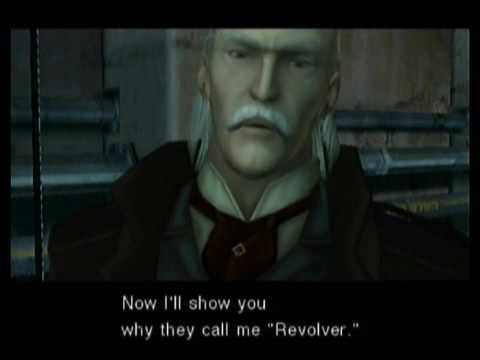
Metal Gear Solid: The Twin Snakes looks spectacular. There's no denying it, the game is a technical masterpiece. Running in 480p progressive scan, at a steady 60 frames per second, and sporting some of the best graphics the Gamecube has to offer, even outclassing the other Metal Gear Solid games on the PS2. The 3D models are exquisite, the textures are detailed, and countless new effects and details were added from the PS1 version. For example, in the portions when Snake is outside, the snow effect is much more realistic, and the snow even sticks to and piles up on Snake if you stand still! All the graphics got completely overhauled from the original, and it is apparent that Silicon Knights and Konami really went over the top to push the limits of the Gamecube. The original Metal Gear Solid may have been a very graphically impressive PS1 game, but The Twin Snakes makes it look like it was running on a 32X! I barely recognize the original after seeing the remake. The cutscenes were redone, as well, with new camera angles, and much more action than the relatively static originals. One area in particular that I want to point out is the weapons. The weapons in The Twin Snakes are so meticulously detailed that you would think they were meant for a very early 360 game! You don't believe me? Take a good look at the image above, then see what you think. Thought so. Moving on, the character models are a major improvement, as their mouths actually move when they talk, and you can clearly see their faces. You have no idea how much nicer this is. Now, with the power of the Nintendo Gamecube, Metal Gear Solid is a true cinematic game.

Score: 10/10


Extras/Value

One glaring omission from the remake that I must address is the lack of VR missions. The original game had them as a sort of warm-up before the actual game, and they became so popular that a separate PS1 game was released only containing VR missions. Silicon Knights intended to include them in the Gamecube version, but ran out of time. They were actually going to add a few more things to the game, but didn't want to delay it any further, so it was released without those extras. It's a shame; the VR missions were pretty fun. Oh, well. Also, as was the case with Tales of Symphonia, a special-edition Gamecube was released in a special edition of the game, and is now a collector's item.

Metal Gear Solid: The Twin Snakes is one of the more sought-after Gamecube titles, and because of this, it is more expensive than your average Gamecube game, and is currently being sold at Gamestop for $23. Unless you played the original a lot and you're comfortable with the original as it is, then I would definitely recommend buying The Twin Snakes. It is essential to a Gamecube collection, and is just a great game for everyone else. However, I can understand if you are a devoted MGS fan, that you would want the original only... kind of. You might be crazy, and you should probably get yourself checked out.

Extras/Value: 7.5/10


Overall

Metal Gear has rightfully earned its place as one of the cornerstone franchises of action games, and maybe one of the most revered series of all time. The remake of the landmark third game in the series, Metal Gear Solid, proves that the best can get even better when you don't have to deal with hardware restrictions. The Twin Snakes showed how a remake should be done, and gave Gamecube owners something to brag about to jealous PS2 owners. With superior graphics, sound, and gameplay, Metal Gear Solid: The Twin Snakes was an absolute triumph, and should be remembered as the game Metal gear Solid should have been all along.


Overall: 9/10

This is lisalover1, sneaking up behind you right now.

Monday, July 19, 2010

The Gamecube Broadband Adapter


Last generation was the time when online console gaming saw a tremendous growth, and is when most people say where it started to mature. The Sega Dreamcast came shipped with a modem adapter, and could be upgraded to a Broadband adapter. It also came with a web browser, which built on and expanded the one released with the Saturn's Netlink modem. Sega knew that online gaming was the future for consoles, but sadly lost the console wars early on. The Playstation 2 eventually got its own network adapter, and the Xbox of course had built-in ethernet. Everyone was prepared for the relatively new concept on online console gaming. Except Nintendo. Having very briefly experimented with online technology with the Nintendo 64DD's Randnet service, people were expecting the Gamecube to fully embrace the concept to compete against Microsoft, Sega, and Sony. Unfortunately, this did not happen quite so smoothly. When asked about the possibility of online services for the Gamecube, Nintendo said quite bluntly that "Our users don't want online games."; a statement that would come back to haunt them.

But that is not to say that the Gamecube remained an offline console. After Sega expressed interest in porting their online smash hit Phantasy Star Online to the Gamecube as an initial exclusive, Nintendo was very interested, despite knowing that the Gamecube was not made for online functions. Thus, two network adapters were released for the system: A Dial-Up Modem, and a Broadband Adapter. Both of which allowed for the release of Sega's Dreamcast classic. Other than that, Nintendo did little to utilize the network adapters, besides incorporating LAN functions into a few games [Which I will get to later]. Eventually, the Gamecube faded away with a mountain of untapped potential.

Even though Nintendo didn't have much faith in the Gamecube BBA, it is still alive and kicking in the eyes of homebrew developers. Yes, there is still some very good reasons to own a BBA, and there are still some things that the Gamecube can do that the Wii cannot. Let's discuss them, shall we?


1. Online Play
Nintendo shut down all the Gamecube online servers quite a while back, but that doesn't mean your 'Cube is forever confined to local multiplayer. Programmers have figured out how to keep last-gen systems online through some creative methods. There have been a couple programs made to do this over the years such as Warp Pipe, but the most popular one is currently Xlink Kai, which has hundreds of players a day across multiple consoles. Although Gamecube online activity is hard to find now, you can still arrange online matches and play online. Here's how it works. For any Gamecube/Xbox/360/PS3/PS2/PSP game that supports LAN play, Xlink fakes the console's connection to the local network, and redirects it to Xlink servers, thus making it playable online. Now, the catch is that this will not work with online games unless they support LAN play. However, this catch also works conversely, in that games that were not previously online, but did support LAN play are now playable online. The following games are supported by Xlink:

Mario Kart: Double Dash
Kirby: Air Ride
1080 Snowboarding
Super Smash Bros Melee*
Sonic Adventure 2 Battle*
Super Monkey Ball 2*
Starfox Assault*

Now, I know what you are thinking: "Hey, those games with an asterisk at the end didn't have LAN play!" Well, hold on, because I have more good news. A certain brilliant homebrew developer created a program called "GCARS-CS" which theoretically allows you to play any multiplayer Gamecube game online. Although only those games are currently supported, the program could work for any game. It is a great idea, and the people who use it say that it works well. So, if you're willing to go through a bit of setup and planning, you could be playing your Gamecube games online, right now. Pretty cool, huh?

I have one more thing to mention. You might have been disappointed when I said that online games that did not support LAN could not be played with Xlink. Well, they can still be played online, just not through Xlink. Phantasy Star Online Episode I & II [and just recently, Episode III] are playable via fan-made private servers. All you need to do is change some settings in the game, and you can play PSO on your Gamecube again! It is obviously not quite as active, but there are still people playing, so you are sure to find somebody. There is also one other MMO available for the Gamecube besides Phantasy Star Online. The game Homeland, only released in Japan, is still being played online today via the same method of private servers. So, you have many options for playing your Gamecube online. The online community for the 'Cube is clearly not going down without a fight, and it shows through the support still being shown for it.


2. LAN Play

This is obvious because I mentioned it before, but you can play your Gamecube via a LAN connection; a method that will never die, no matter what the circumstances. You can hook 2-4 Gamecubes up to the same network, and have some good ol' multiplayer fun. You must have more than one Gamecube, and a BBA, separate television, controller, and Ethernet cable for each one, but there's nothing that can match the sheer fun of LAN console gaming. If you can afford it, it is a total blast.


3. Homebrew

Homebrew developers have come up with some crafty ways to use the Gamecube's BBA. If you have a method to load homebrew on your Gamecube, you can do some pretty nifty things. For example, you can load Gamecube ISO backups over the network, without having to burn any discs, or install any modchips! It is somewhat slow on many games, and some games are incompatible, but still, the fact that this is even possible is amazing. You can also load homebrew over the network, without having to copy it to an SD card or a Gamecube memory card. Both these things are good solutions if you want to keep the files on your computer.


The Gamecube is still alive in its own right, with devoted developers taking advantage of even the most neglected add-ons for the system, and making programs that help people experience the Gamecube's online functions for long after they were supposed to be canceled. If you were ever curious about what the Gamecube's online play was like, you haven't missed your chance. You can still experience all of it, and more. Long live the Gamecube on the World Wide Web!

Here are some links to the services and programs I mentioned in this article:

Xlink Kai: http://www.teamxlink.co.uk/
Phantasy Star Online Private Servers: http://schtserv.com/
Gamecube Homebrew: http://gcemu.dcemu.co.uk/


This is lisalover1, looking for someone to play Gamecube Xlink with!